Showing posts with label Travel News. Show all posts

Monday, September 25, 2006

US Eases Ban on Air Travelers Carrying Liquids


WASHINGTON, Sept 25 (Reuters) - The United States said on Monday it was partly easing its ban on liquids and gels in carry-on bags on airline flights, a policy imposed last month after authorities in London said they foiled a plot to bomb U.S.-bound flights.

Travelers will be allowed to carry travel-size toiletries of 3 ounces (90 ml) or less in a small clear-plastic bag, the Transportation Security Administration said. They also may carry on drinks and other items purchased in the secure areas of the airport.

Lip gloss and hand lotion will no longer be confiscated by airport screeners. Those items will be checked over and placed in bags for passengers to carry aboard, if they clear security, a Homeland Security official said.

"After the initial, total ban, we have learned enough from the U.K. investigation to say with confidence that small, travel size liquids are safe to bring through security checkpoints in limited numbers," said Assistant TSA Secretary Kip Hawley.

"We have also taken additional security measures throughout the airport that make us comfortable allowing passengers to bring beverages and other items purchased in the secure area onboard," Hawley said.

The Department of Homeland Security banned liquids and gels on flights in August after the British government arrested at least 24 people and foiled what it said was a plot to simultaneously blow up several U.S.-bound airliners using liquid explosives.

Wednesday, September 13, 2006

Cruise Lines Welcome Kids


Q . I have a 16-year-old I'd like to take on a cruise. Can you give me information on ocean liners that accommodate teens?

A . With more than a million children sailing each year, your daughter will hardly contract cabin fever -- or teen ennui.

"Many cruise lines have programs onboard that cater to kids, from toddlers to teens," says Robert Sharak, executive vice president of Cruise Lines International Association ( www.cruising.org), which represents the major cruise lines. "With the camps or organized activities, the kids get together in a supervised atmosphere with children their own age."

Most cruise lines have children's programs; even Carnival's party-hearty Fun Ships organize Club O2 for ages 15 to 17. Many programs, which are included in the price, provide teens with a separate space where they can hang out sans parents, as well as activities such as scavenger hunts, disco parties and casino nights.

"With morning, afternoon and night programs, parents can have three or four hours at a time to themselves," says Else Daniels, a cruise specialist with Vacations at Sea in D.C. (202-686-7447), singling out family-friendly Royal Caribbean, Carnival, Celebrity and Princess. "Then they meet for meals and compare notes."

To winnow down the choices, Sharak says to approach a cruise like any other vacation, with a roster of questions. On that checklist: where you want to go (Caribbean, Alaska or Mediterranean), what you want to see and do (snorkel, view wildlife, tour European capitals), when you wish to travel (May to September for Alaska or the Mediterranean, anytime for the Caribbean) and what your budget is. Also consider the demographics of the cruise line or destination. For example, luxury lines such as Seabourn often attract older crowds, as do Alaskan cruises.

Daniels recommends the Caribbean, because of its vast number of diversions, from exploring Mexican ruins to snorkeling in the Cayman Islands. Also remember that this is a family vacation, so you don't need to enroll your teen in every shipboard activity. While the programs are optional, family ties aren't.

Andrea Sachs
Washington Post

Wednesday, August 30, 2006

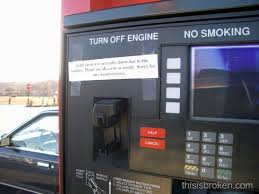
Falling Gas Prices Fuel Labor Day Travel


Labor Day travel is expected to increase this year, if only slightly, and some of that end-of-summer wanderlust can be attributed to gas prices that have fallen of late.
That's the assessment of AAA Mid-Atlantic, the nation's fifth largest auto club, which says 452,000 residents in the region will take car trips of 50 miles or more over the holiday weekend.

They will hit the roads a week after gas prices fell 6 cents, bringing the average price for self-serve regular to $2.88 in Maryland, for example. That compares to the $3.09 motorists were enduring one month ago. Last year at this time, the price of a gallon of unleaded regular gas was 22 cents cheaper.
The recent drop in prices at the pump is the biggest two-week decline since last September, when refineries in the Gulf of Mexico came back online in the wake of Hurricane Katrina, some oil industry anaysts say.

"The recent drop in local gasoline prices is encouraging news to motorists and all consumers alike, who have been pinched all summer long by the second highest gasoline prices in history," AAA Mid-Atlantic's John B. Townsend II said in a statement.

With gas prices traditionally dropping after Labor Day, further relief could be on the way, AAA said.

Sunday, August 27, 2006

Spying Charge Brought Against Geographic Reporter in Sudan


On assignment for National Geographic magazine in Africa, U.S. journalist Paul Salopek was charged with espionage and other crimes today by a Sudanese court—charges that could land him in prison for years.

The Pulitzer Prize-winning correspondent had been reporting on the Sahel—the semi-arid southern fringe of the Sahara that stretches nearly the width of Africa. Three weeks ago Sudanese forces in Darfur Province captured him and his driver and interpreter, who are both from neighboring Chad.

At the time of his arrest, Salopek, who is on leave from the Chicago Tribune, had been carrying publicly available maps of Darfur and two United States passports, which Sudanese officials consider indications that he was spying, according to sources close to the investigation.

Traveling with multiple passports is legal and even common among reporters looking to shuttle among several countries without arousing suspicion.

"As one who has worked in Africa for more than 15 years, I have two passports," said Chris Johns, Editor in Chief and photographer for National Geographic magazine.

"There are many reasons for that. For example, during apartheid days, if I needed to cover South Africa, it was not in my best interest [when entering black-controlled African countries] to have a South Africa stamp in my passport," said Johns, speaking from his home in Virginia.

He added that the charges against Salopek are "false."

Repeatedly extolling the 44-year-old reporter's integrity, skill, and professionalism, Johns said Salopek "would never in any circumstances be involved in espionage. He is not a spy."

Similar sentiments came today from Tribune Editor Ann Marie Lipinski. "Our colleague and dear friend, Paul Salopek, is one of the most accomplished and admired journalists of our time. He is not a spy," she said in a statement.
READ MORE.....

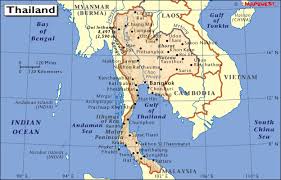
Thailand Travel Alert


Media reports issued on 25 August 2006 continue to draw speculation to the events surrounding the alleged plot to assassinate caretaker Prime Minister Thaksin Shinawatra near his residence in Bangkok on 24 August. Reports clarify that the car that police officers seized near the Bang Phlat overpass contained TNT, C-4 explosives, fertilizer, detonating cords, fuses and a remote control set. The items were not, however, assembled into a bomb. Thaksin continues to assert that his opponents were plotting to assassinate him and accused several military officers of being behind the plot. The National Intelligence Agency stated its certainty that the 24 August incident was indeed a plot to assassinate Thaksin. Government critics claim, however, that Thaksin's supporters or the ruling Thai Rak Thai (TRT) party may have staged the alleged plot in a political ruse to gain sympathy votes for Thaksin; 24 August was the first day of campaigning for the 15 October general election. Other theories suggest that Thaksin's supporters staged the plot to discredit General Panlop Pinmanee, the deputy director of the Internal Security Operations Command who was dismissed from his post on 24 August for his alleged role in the plot, due to his close ties to a key leader of the People's Alliance for Democracy (PAD), the anti-government group that coordinated large-scale protests in Bangkok in March.

Another theory suggests that the alleged plot was an attempt to draw public attention away from a renewed investigation into the controversial sale of Shin Corp., which in part prompted a series of protests demanding Thaksin's resignation, as his family owned the company.

Approximately 150 people gathered in front of the Bangkok residence of the Privy Council President on 25 August to demand protection of Thaksin, while approximately 300 PAD members rallied in front of the Royal Thai Police headquarters to protest violence against its members by pro-government supporters. As a result of the alleged assassination plot, security has been increased at Thaksin's private residence in Bangkok and around Government House.

Significant traffic congestion was reported on 25 August along Ratchadamnoen Avenue and Phitsanulok Road as traffic on Ratchadamnoen Road is restricted. There are rumors that Thaksin's government is planning to issue a state of emergency in response to the alleged assassination plot, and opposition and human rights groups warn that such a decree would only be instated to prevent anti-government protests. Several groups fear that the latest developments may prompt pre-election violence between pro- and anti-government groups.

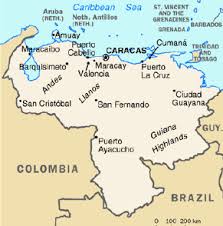
American Relations Strained in Venezuela


Venezuelan troops seized several bags belonging to the U.S. Embassy at Simon Bolivar International Airport (SVMI/CCS) in Caracas on 24 August 2006. Reports indicate that the embassy had notified Venezuelan officials about the bags, but that more than the number reported had arrived on the aircraft, prompting the confiscations.

The bags were taken from four U.S. Embassy vehicles parked outside of the airport after they had been unloaded from a U.S. military aircraft. U.S. officials have stated that their government will lodge a protest regarding Venezuela’s actions, which they claim “violated diplomatic and international laws." The contents of the bags have not been confirmed; Venezuelan officials claim that they contained supplies for the Venezuelan military, while U.S. officials have stated that they were carrying the personal possessions of embassy personnel. The incident is expected to increase already heightened tensions between the two countries.

U.S. Identifies Trouble Spots


The U.S. State Department provides different levels of international travel information to citizens. Find them at www.travel.state.gov.

Travel Warnings:
These are issued when Americans are urged to avoid travel to a particular country or region. Currently on the list are:

Afghanistan, Algeria, Bosnia-Herzegovina, Burundi, Central African Republic, Chad, Colombia, Democratic Republic of the Congo, East Timor, Eritrea, Haiti, Indonesia, Iran, Iraq, Israel, Ivory Coast, Kenya, Lebanon, Liberia, Nepal, Nigeria, Pakistan, the Philippines, Saudi Arabia, Somalia, Sri Lanka, Sudan, Uzbekistan, Yemen, Zimbabwe.

Public Announcements:

These involve short-term, specific threats, such as Islamic unrest in Bangladesh, political protests in the Mexican city of Oaxaca and a bridge collapse in Venezuela.

Consular Information Sheets:

These fact sheets often highlight conditions that officials don't believe rise to the travel-warning level. An example would be the cautionary note about a ``growing'' problem of crime against tourists in Belize.